Let’s jump back to where it all began.
Before my exchange officially began, I had tried to prepare as much as possible. One of the most important things, of course, was finding accommodation. Several platforms help with this, such as Spotahome, Idealista, and Citylife in Spain. In the end, I booked my apartment through Spotahome.
Websites that help with finding housing in Spain:
- Citylife Madrid
- Spotahome
- Idealist
- helpHousing
- Aluni.net
- Inlife
My boyfriend was also going on an exchange, but to Brazil. Luckily, our semesters started around the same time, so we were able to leave Finland together. He had a layover in Madrid and stayed with me for a few days to help me settle in. When we arrived in Madrid, I couldn’t help but feel a bit anxious. I had heard stories about apartments not matching the pictures, or worse, not existing at all. Thankfully, my apartment was real and looked just like it had online.

My doubts about the apartment mainly came from the fact that my landlord was a company called Viving Up, which had very mixed online reviews. On top of that, I had to pay several fees before even seeing the apartment, like the first month’s rent and a booking fee through Spotahome, which didn’t exactly ease my worries about it being a scam. Before moving in, I also paid a deposit and a landlord fee. I remember messaging my landlord on WhatsApp and waiting weeks for replies, and they would almost always answer in Spanish.
I do have to admit, it wasn’t very clean when I moved in. There was food left in the refrigerator and even in the kitchen drawers. The bathroom also had hygiene products left behind by previous tenants. I can understand why, because when you move abroad, you often buy things you don’t have time to finish before leaving, so it would be a waste to throw them away. But still, it felt a bit unhygienic, you know.
If you’re reading this while planning your own exchange and considering Spotahome, I’d say you don’t need to worry too much. The apartments on their platform are usually legit, which I learned after arriving. But if you’re booking through a more random or unverified source, I would definitely be more cautious.
One thing to know is that Spanish people speak English quite poorly. I remember the struggle of communicating in the pharmacy with the only words I knew being ”gracias” and ”adiós”, and having no Wi-Fi to translate. It was a struggle, I must say.

In Finland, I had attended a Spanish course to learn some before going on my exchange. The course ended up being so intense that I dropped out after three sessions. After the first week in Spain, I eventually signed up for Espanol A1 at my school to try to learn Spanish again. The course ended up being one of my highlights during my exchange, mostly because I got my dearest exchange friends from this particular course. You’ll hear about them in future posts.
Madrid is home to many universities, so co-living is a very common housing option. I lived in Argüelles, paying around 700€ per month. In total, we were seven people sharing the apartment, three guys and three girls, plus me, with just two bathrooms and one kitchen. It was definitely a full house. I remember our kitchen didn’t even have a proper window, which sometimes felt a bit claustrophobic, but somehow we made it work.

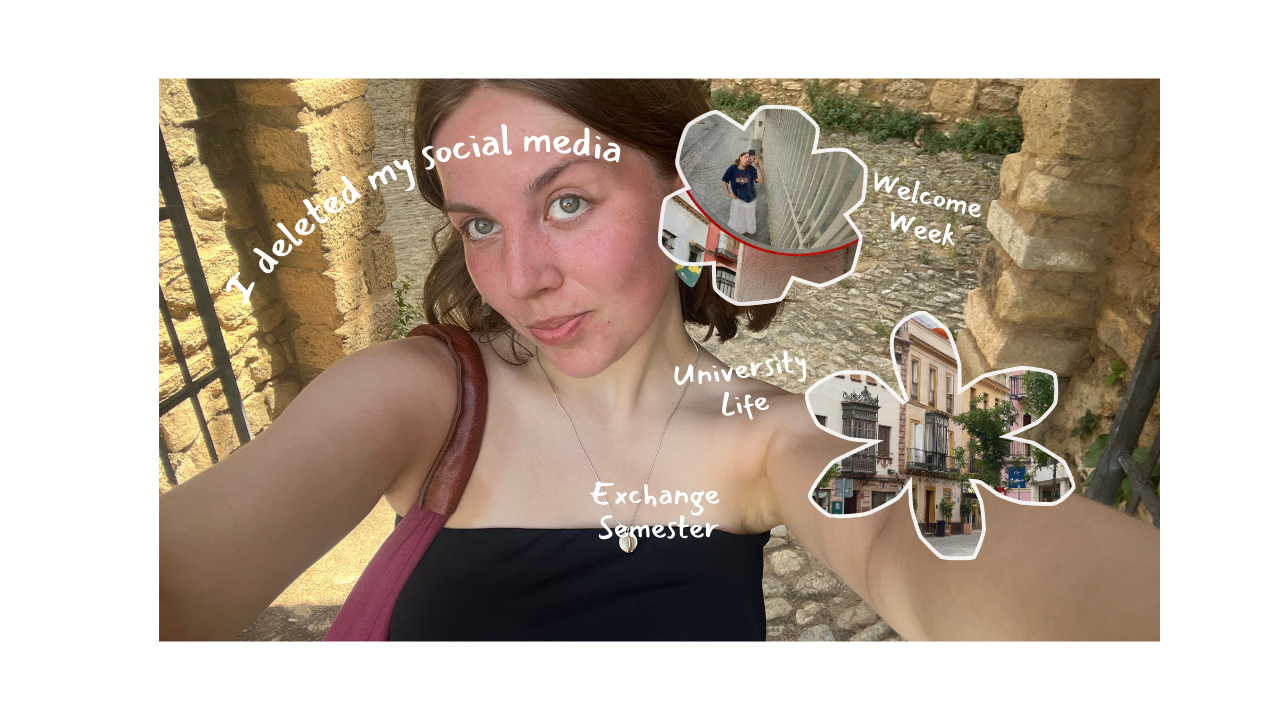
In my previous post, I mentioned that I had deleted my social media at the beginning of my exchange. Even so, I wanted to document my experience somehow, so during the first weeks, I started creating daily photo collages, a kind of visual diary. I found this to be a nice way to keep a diary for myself when not sharing or posting pictures on social media. Now looking back at those photos, I feel like I can relive those memories and feelings.
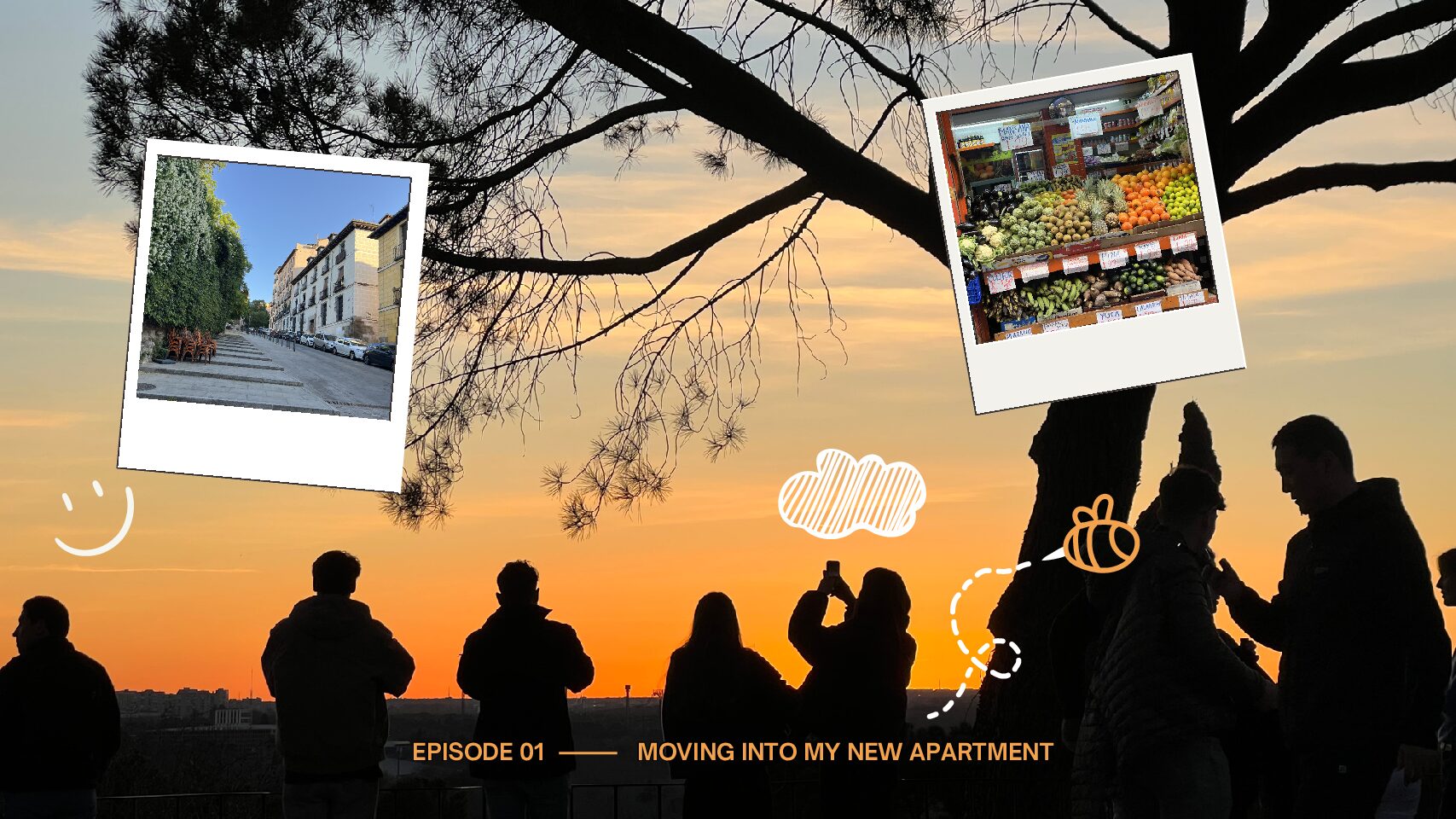
During my first days in Madrid, I explored some of the city’s most beautiful spots. I visited Retiro Park and watched the sunset from Templo de Debod, which is absolutely stunning. I also started getting to know my roommates. At first, I thought I’d only be living with guys, since most of the girls hadn’t arrived yet. Eventually, I met everyone: the guys were from Mexico, Italy, and France, and the girls from Italy, Switzerland, and Austria.
I arrived in Madrid on the 1st of February, and one of the first things we did was visit the Bernabéu stadium, since my boyfriend is a huge Real Madrid fan. Ironically, during my entire time in Spain, I never actually watched a game, not at the stadium, nor in a bar. Still, football is everywhere in Madrid, especially with both Real Madrid and Atlético Madrid in the city.

My classes at Universidad San Pablo CEU started on the 7th of February, marking the official beginning of my exchange. Looking back, those first few weeks were all about adjusting, exploring, and getting to know the city. I have to say, moving to a new place knowing barely anyone was quite hard. Creating my daily photo collages became a small but meaningful routine, a reason to push myself to go out alone, explore, and slowly build a life in a completely new place.
Things to bring when going on exchange:
- Laptop and phone + charger
- Headphones
- Power adapter
- Towell
- Bedsheets (if not provided)
- Reusable water bottle
- Laundry bag
- Backpack
- Lock (for trips and hostel use)
- Passport / ID
- Debit/credit cards + some cash
- Everyday outfits
- A few nicer outfits + bag
- Shoes (comportable for walking)
- Swimwear
- Coat
- Underwear & socks
- Sleepwear
- Hygiene products & medicines (painkillers etc.)
- Copies of documents (travel insurance, acceptance letter, visa documents if needed)
- PS: In Madrid it was quite cold in the mornings and evenings in February so I would recommend bringing sweaters or knitted jumpers